Amboseli
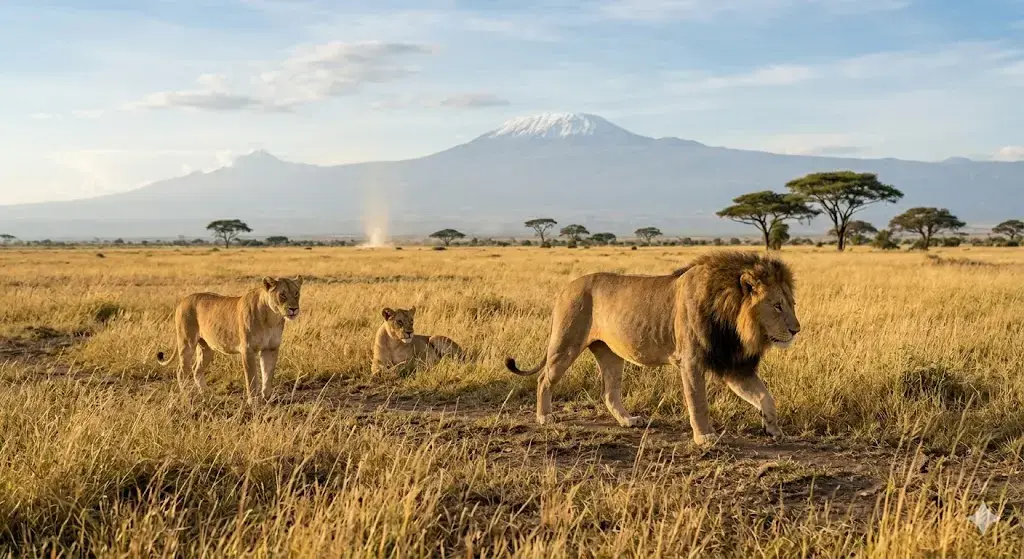
Elephants under Kilimanjaro.
Size
392 km²
Best months
Jan, Feb, Jun, Jul, Aug, Sep, Oct
Signature wildlife
Elephant · Wildebeest · Buffalo
Why Go
The reason to be here.
Amboseli holds some of the largest tuskers left in East Africa. The elephants here have been studied continuously since 1972, making this one of the most documented populations on earth — and one of the most relaxed around vehicles.
Despite the name (Amboseli means "salty dust" in Maa), the park is fed by underground rivers from Kilimanjaro's snowmelt. The result is a network of permanent swamps that draw thousands of animals into a relatively small area, especially in dry months.
The Kilimanjaro backdrop is real but fickle — the mountain is most reliably clear at sunrise and sunset, and often shrouded by midday. Plan your photography accordingly.
What You'll See
Headline species.
Elephant
Tuskers with ivory still touching the ground.
Cape Buffalo
Large herds congregate around the swamps.
Hippo
Permanent pods in Enkongo Narok swamp.
Lion
Smaller population than the Mara but reliably sighted.
Spotted Hyena
Active at dusk near the western marshes.
African Fish Eagle
Calling from acacias at the swamp edge.
Best Time to Visit
Month by month.
Wildlife-viewing quality, scored from off-season to peak. Rains, migrations and water levels all shape what you'll see when.
Safaris
Trips that include Amboseli.
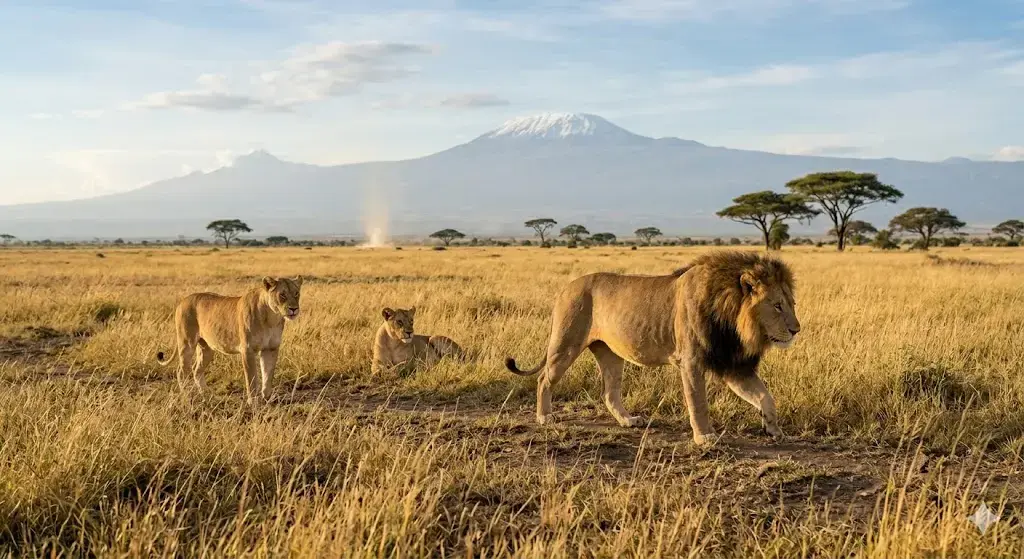
Classic Mara & Amboseli
The two parks that built Kenya's reputation — Maasai Mara's predator country and Amboseli's elephant herds under Kilimanjaro. Seven days, well-paced.
$1,890 / person
Big Five Grand Circuit
The complete Kenya loop. Four parks, ten days, and a deliberate route through the country's best big-game habitat. Lion, leopard, elephant, buffalo, rhino.
$3,200 / person